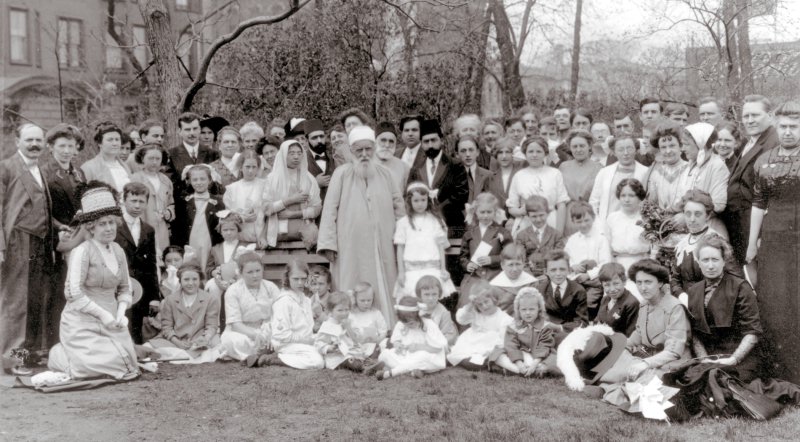
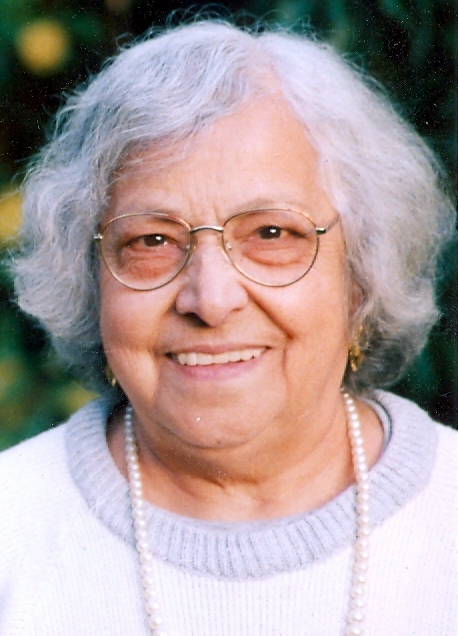
Parvin Payman was born on 5 July 1931 in Isfahan, Persia, the second of four children. Her father and grandfather were Bahá’ís- the latter having met Abdu’l Baha.
Being of Zoroastrian stock she spent her teens in Yazd and, unusually for a girl, graduated from an English Missionary High School (Izadpayman) in 1950.
She excelled in arts and crafts and was always asked to chant prayers at Bahá’í events.
Parvin married Jamshid Namvari in Tehran in 1955 and they soon were blessed with children: Shahab and, four years later, Shohreh. Shohreh’s forceps delivery damaged her brain, and after many many years of expenditure and effort both at home and abroad the realisation that there will never be a cure was devastating for the whole family – especially Parvin.
Accepting this destiny, her caring role for the whole family continued until 1971, when Parvin and Jamshid answered calls for pioneers from the Universal House of Justice telling Bahá’ís in Iran that there would come a time when they would want to leave Iran but wouldn’t be able to. So, leaving their comfortable middle class lives behind, they came to London and were guided by the National Spiritual Assembly to settle in Cambridge.
Shortly after the 1979 Iranian revolution, all their properties and savings were confiscated and Parvin and Jamshid worked in various factories, always mindful of their children and their well-being.
Shohreh eventually got a place in a hospital near Cambridge where she could be cared for better than home. But by that time, caring for her for decades had left its mark on Parvin – her physical health deteriorated gradually over the years but she would never complain and was always cheerful.
She fitted into British society well due to her excellent English which she learnt at school and was always telling people about her Faith, which sustained and nourished her through some very difficult times.
Parvin and Jamshid moved to Kennington (near Oxford) in 1985 to be near their son Shahab. Parvin became a grandmother first 17 years ago and loved Andisheh and Nahal, for whom she knitted and embroidered many garments.
Two and a half years before her passing, she fell in the street, breaking her hip (it was replaced with an artificial one). She had a pacemaker soon after, but did not really recover. Parvin suffered renal failure and was hospitalised two months prior to passing away on 19 July 2010.
Her unconditional love, faith, artistery and resourcefulness is an example to the remaining family and she will be forever missed.

 Thames Valley Bahá’í Community