There are two kinds of fast: material and spiritual. The material fast consists in abstaining from food and drink, that is, refraining from satisfying the physical appetites. But the true and spiritual fast is for man to forsake covetous desires, heedlessness, and evil and animalistic attributes. The material fast is therefore a symbol of that spiritual fast. It is like saying: “O Divine Providence! As I am abstaining from bodily desires and from all occupation with food and drink, even so purify and sanctify my heart from the love of anyone save Thyself, and shield and protect my soul from corrupt inclinations and satanic qualities, that my spirit may commune with the breaths of holiness and fast from the mention of all else besides Thee.”
‘Abdu’l‑Bahá, Twelve Table Talks Given by ‘Abdu’l‑Bahá in ‘Akká.
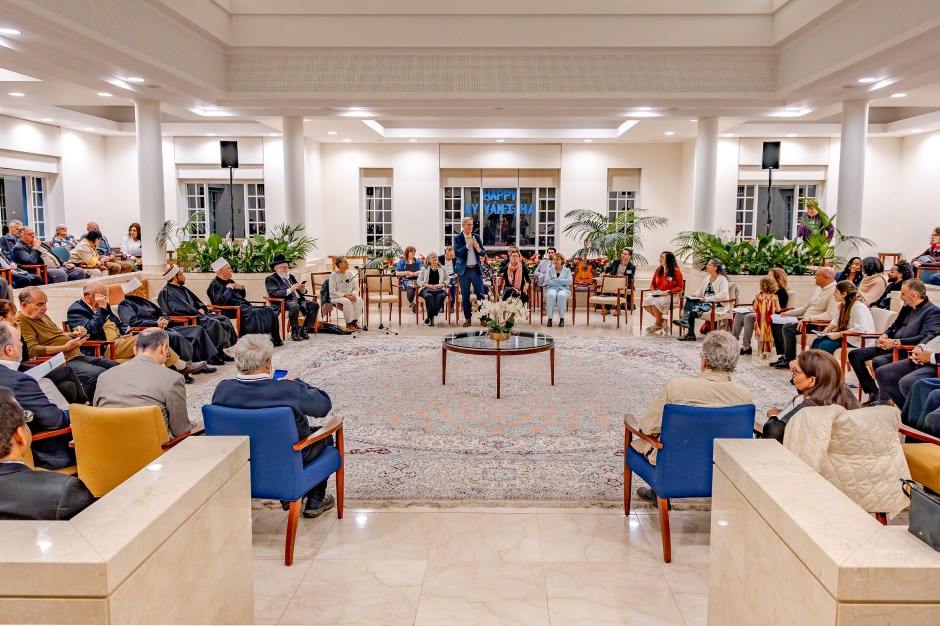
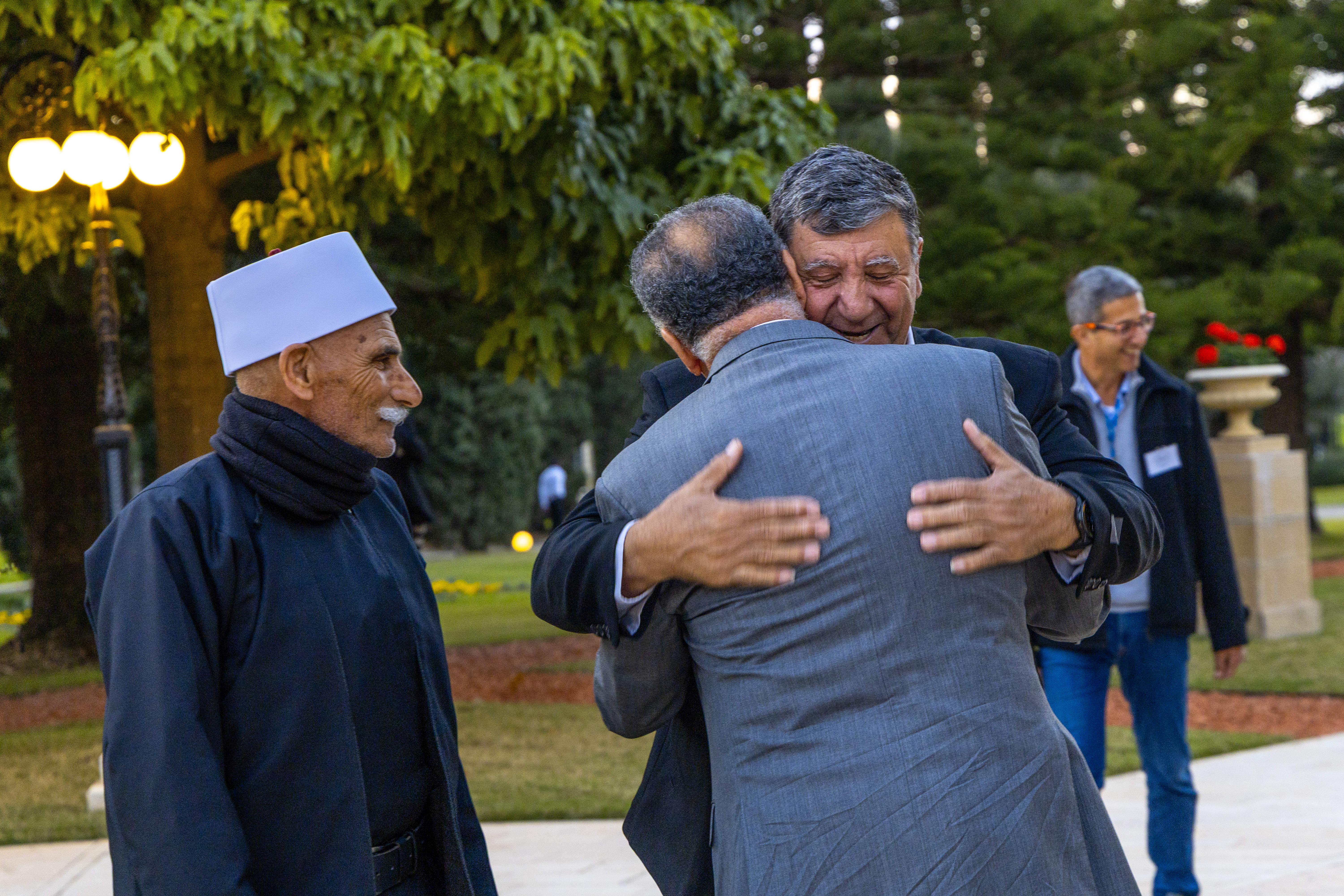
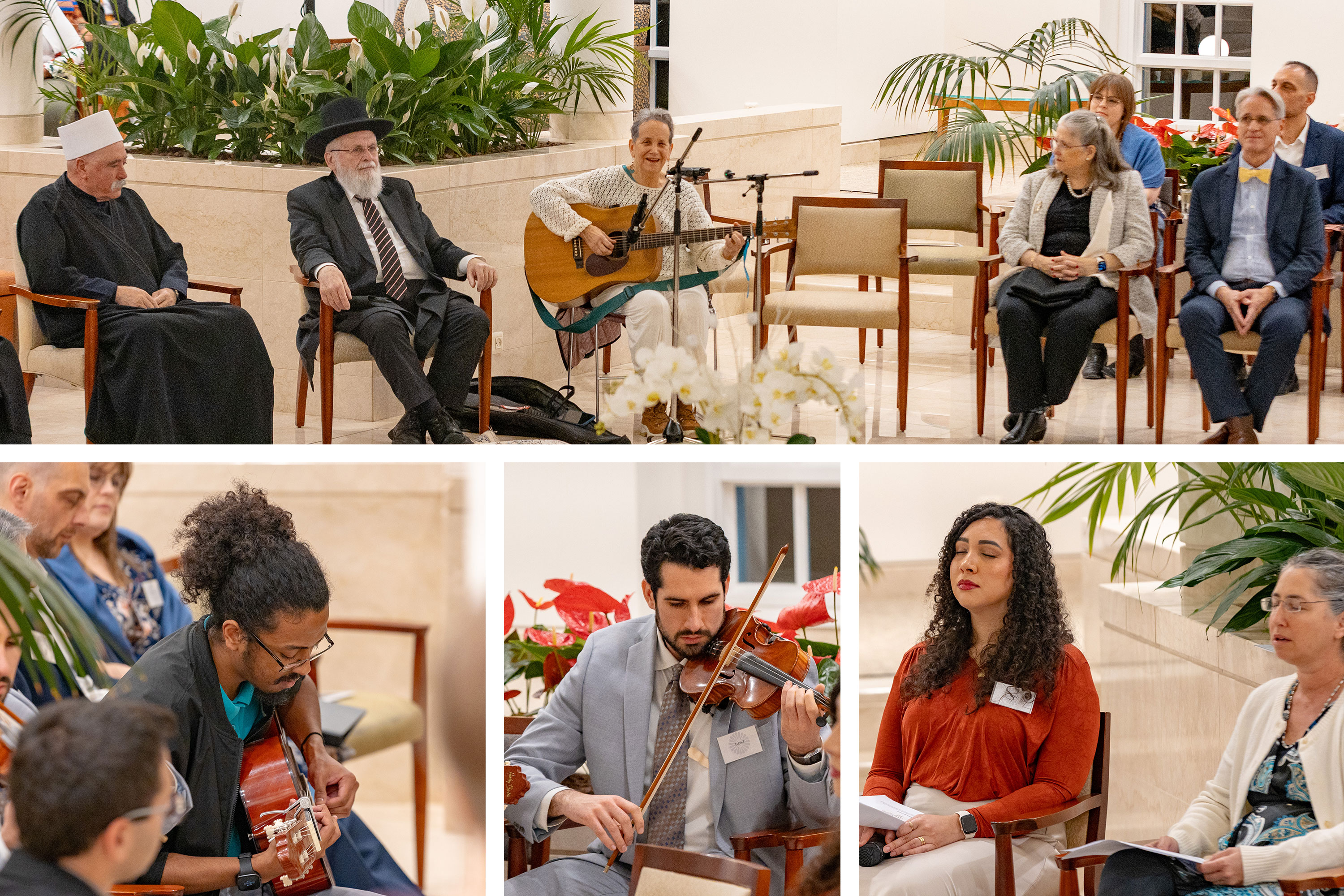
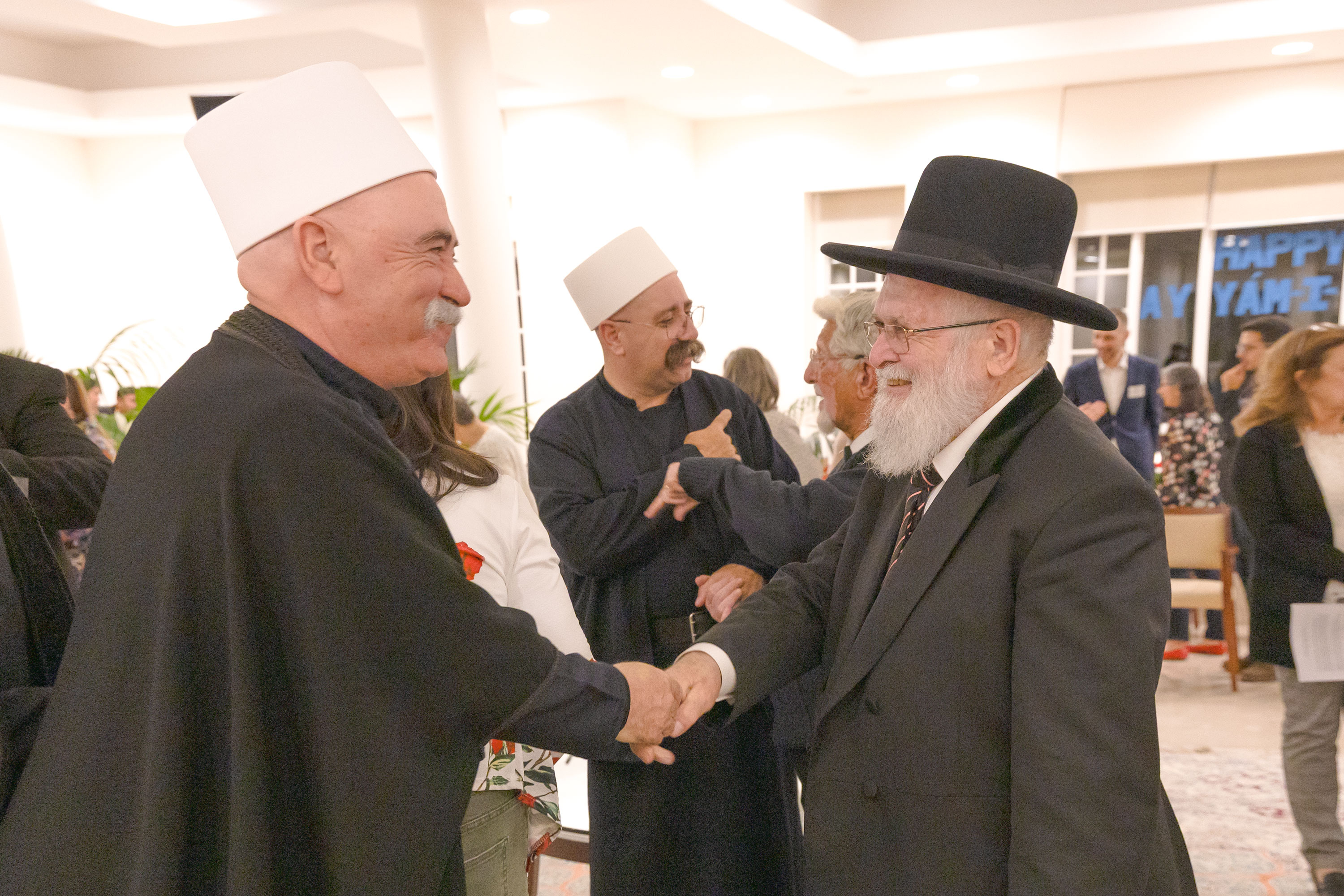
Last week, more than 70 guests from Jewish, Muslim, Christian, Druze, and other communities gathered in the vicinity of the Shrine of Bahá’u’lláh in Bahjí for a special evening of prayers, sacred writings, and music to mark Ayyám-i-Há—a period in the Bahá’í calendar dedicated to hospitality, generosity, and service to others.
The gathering, which took place on 25 February, brought together local officials, educators, artists, and residents from ‘Akká, Haifa, and surrounding towns and villages, offering an occasion for connection and reflection at a time of deep uncertainty in the region.
David Rutstein, Secretary-General of the Bahá’í International Community, welcomed guests with a description of the occasion. “I am delighted to welcome you to our celebration of Ayyám-i-Há, which are days in the Bahá’í calendar just before our period of fasting, dedicated to generosity, hospitality and service to humanity,” he said. “Looking around the room, we are even more delighted to see all of you, a sample of the diversity of the people of this land, and we are honoured to be able to call you our friends.”
In addition to bringing people together in an uplifting atmosphere, this year’s event highlighted the capacity within each person to contribute to the common good and to render service to humanity. Each guest received a card bearing a passage from the writings of ‘Abdu’l-Bahá: “We must now highly resolve to arise and lay hold of all those instrumentalities that promote the peace and well-being and happiness, the knowledge, culture and industry, the dignity, value and station, of the entire human race.”
The evening followed on from a series of gatherings that began in late 2023, which have cultivated bonds of friendship and spiritual fellowship among the diverse people of the ‘Akká-Haifa area during particularly challenging times in the region.
Reflections from participants
The evening drew heartfelt reflections from participants of different backgrounds, whose words spoke to shared longings for hope and unity.
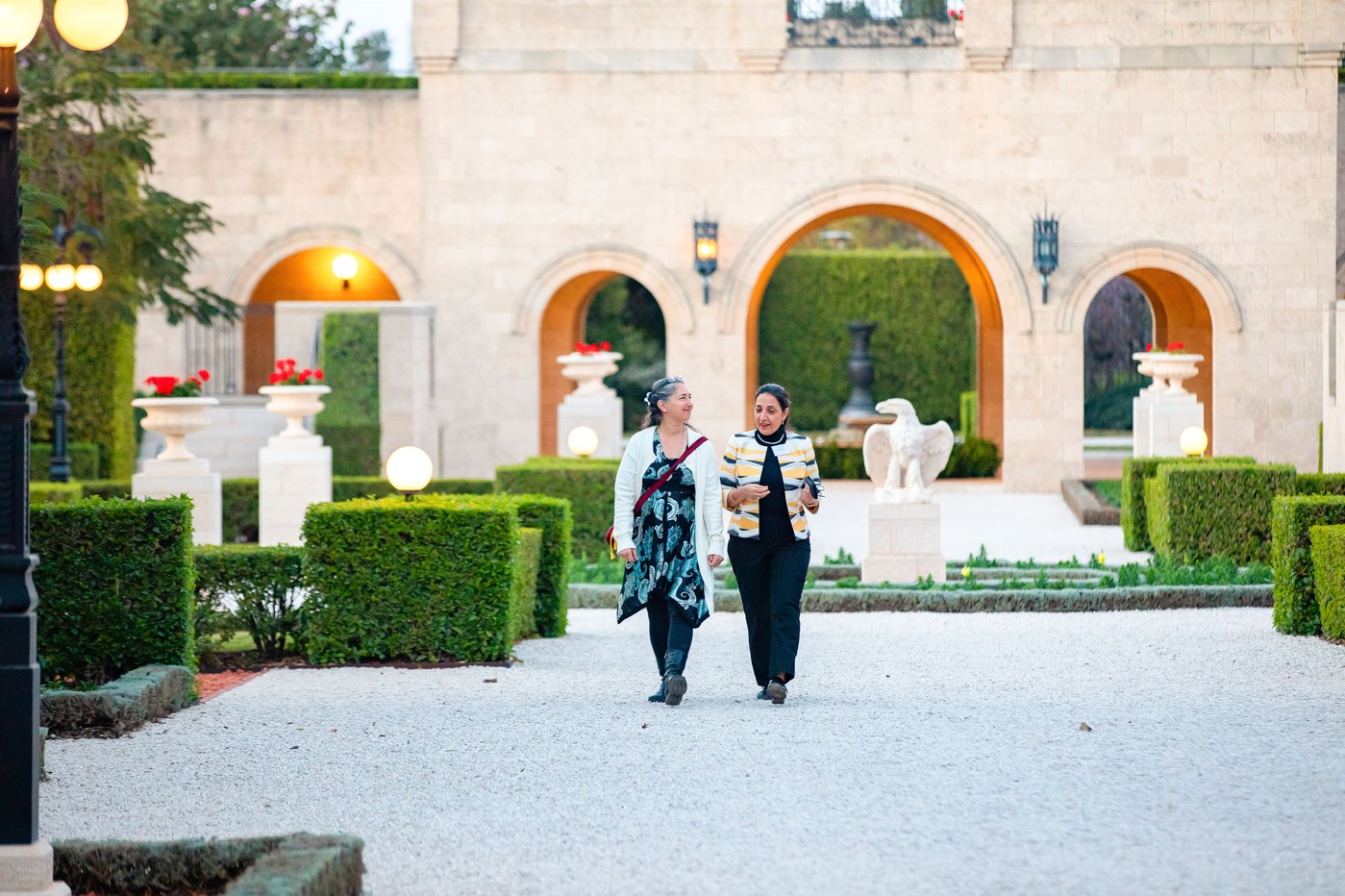
One of the participants, an architect, described the experience of visiting the Shrine and gardens: “The physical environment speaks to me, especially when we visited the Shrine. There’s an amazing energy in that place. I am an architect by profession, so the way the buildings communicate is very significant. That was something special.”
His wife, an artist, shared a perspective on hope that resonated with the evening’s spirit: “It’s so easy to fall into despair in the world today. There’s fear in all corners. And someone once said to me something that really touched me: hope is a verb. It’s not a thing. It’s something we do and something we create.”
She added: “And of course we need people around us to do that with.”
Sheikh Isan Ali Halabi, a Druze participant, spoke of the deep historical connection between the Druze and Bahá’í communities, recalling that a prominent Druze figure had a direct relationship with Bahá’u’lláh during His time in the Holy Land. That bond, he said, has endured across the generations and continues today through close friendships between the Druze and the Bahá’ís. “This bond and these gatherings remove separation and bring hearts closer together,” he said.
Sheikh Antaar Maadi, a participant from Yarka, reflected on the spirit of the evening: “We pray that peace, safety, and security spread throughout this land and the entire world.”
“Through these gatherings, we affirm that all people—regardless of their identities, religions, or backgrounds—are part of one human family,” said Sheikh Samir Assi, a participant from ‘Akká.
Mr. Assi added: “Lands cannot be built, nor civilizations established, except through love, cooperation, and relationships.”
A local resident from Misgave, reflected on how the beauty of the setting spoke to deeper realities: “Today I felt joy in my heart, because the beauty outside reminds me of the beauty within, which exists in every person.” She described her hope as rooted in faith in human goodness: “The great aspiration really, the hope is for peace: peace between human beings.”
Two participants who regularly attend the monthly gatherings said these occasions have become part of their experience of home. “[Hope is] faith that there will be a peaceful time. We always believe in that,” one said. “Happiness is family, the feeling of home.”
She added: “When I come to gatherings like these, I always feel peace, harmony, and smiles. It’’s a place where you truly connect with your soul.”
Nadav Kashtan, another participant, captured a sentiment shared by many at the gathering: “There are always forces pulling in different directions, and we want to be among those moving toward hope.”
Ofer Amar, a local media practitioner who has attended these gatherings since they began, reflected on what draws him back: “An environment where we all feel as one family.”
Yam, a participant from Tel Aviv, expressed hope in terms of the small and the immediate: “What gives me hope are small successes, because in my view it is the small things that bring change. Even seeing a person smile… means that at least in that moment, they are doing well.”
Among the youngest voices of the evening, Yasminah, a child, offered a simple observation: “There are people who have hope. And more and more people are coming together and caring.”

 Thames Valley Bahá’í Community