

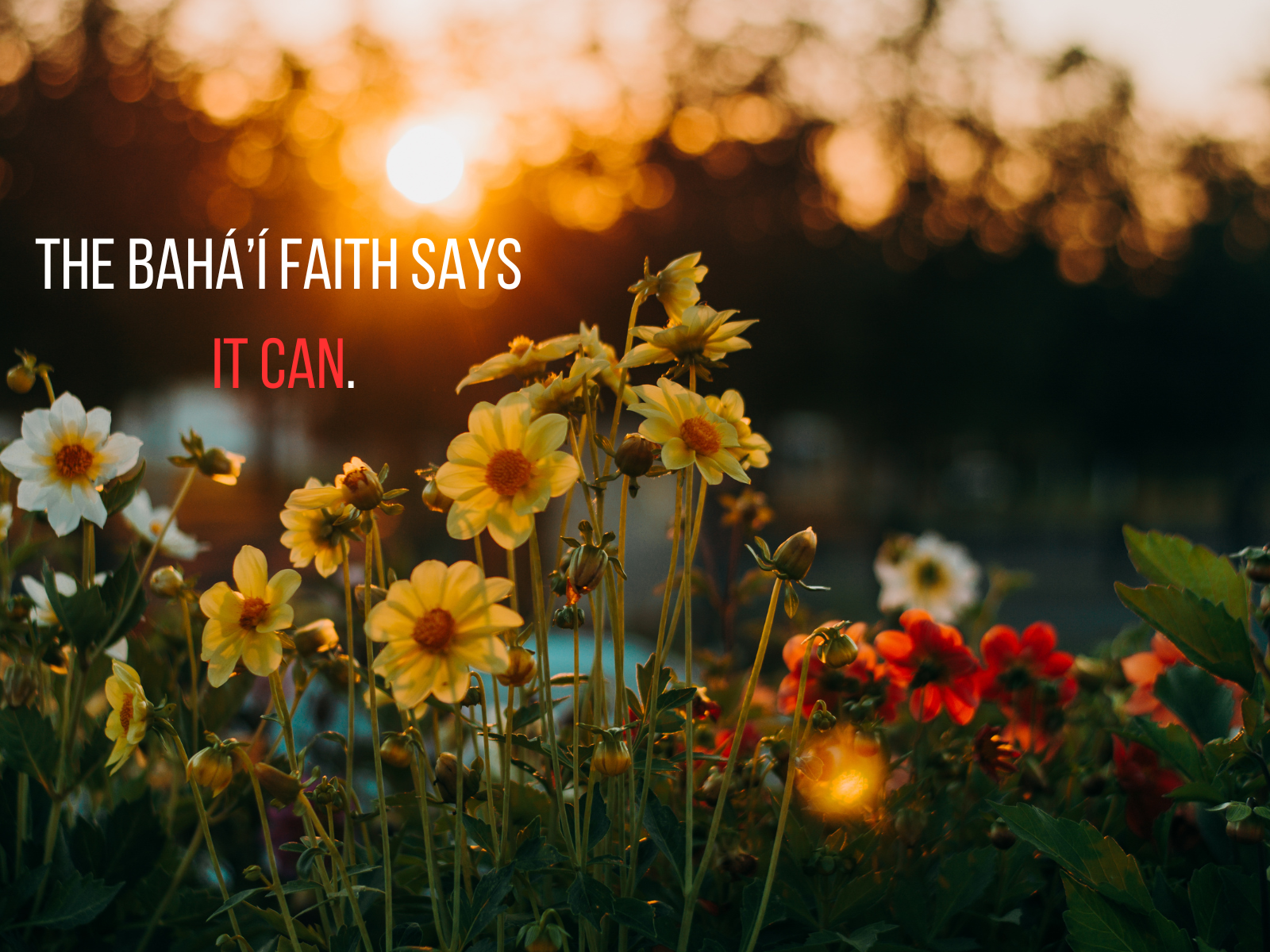
The Bahá’í Faith says it can. It teaches that all humans are one family and that every sincere path to the divine shares the same core truths. Instead of replacing other teachings, it acts like a canopy, connecting diverse beliefs under the shared principles of love, justice, and unity.
The Bahá’í Faith acts like a canopy, connecting diverse beliefs under the shared principles of love, justice, and unity.
A central idea in the Bahá’í Faith is the oneness of spiritual guidance. Bahá’ís believe that God has sent many teachers throughout history – Abraham, Moses, Krishna, Buddha, Zoroaster, Jesus Christ, Muhammad, and others. These teachers are called Manifestations of God, and each brought guidance suited to the time and place in which they appeared. While their social laws and customs differed, their messages of love, compassion, and service are the same.
Bahá’ís believe that Bahá’u’lláh, the Founder of the Bahá’í Faith, is the latest of these Manifestations. His teachings honor past guidance while offering solutions for today’s challenges. Rather than rejecting earlier teachings, Bahá’u’lláh fulfills their promises and helps humanity move toward global unity.
Another important principle is the oneness of humanity. Differences in race, culture, language, or background should not divide people. Bahá’ís describe humanity as a garden of flowers, each unique, yet all beautiful together. True unity does not mean everyone is the same; it means respecting differences while working together in harmony.
Bahá’ís describe humanity as a garden of flowers, each unique, yet all beautiful together.
The Bahá’í community reflects this vision in practical ways. There is no clergy. Local communities are guided by elected councils, and the global affairs of the Faith are overseen by the Universal House of Justice. Decision-making uses consultation, a process that values truth, humility, and collective wisdom over personal opinion.
Daily life also emphasizes devotion and service. Houses of Worship, open to everyone, welcome prayers from all paths, and gatherings like the Nineteen Day Feast strengthen fellowship and community spirit. The ethical principles in the Kitáb-i-Aqdas guide both personal growth and the well-being of society.
By honoring the shared origin and purpose of all spiritual guidance, the Bahá’í Faith offers a vision where humanity can gather under one canopy, celebrating diversity, nurturing unity, and working together to build a peaceful and just world.
 Thames Valley Bahá’í Community