
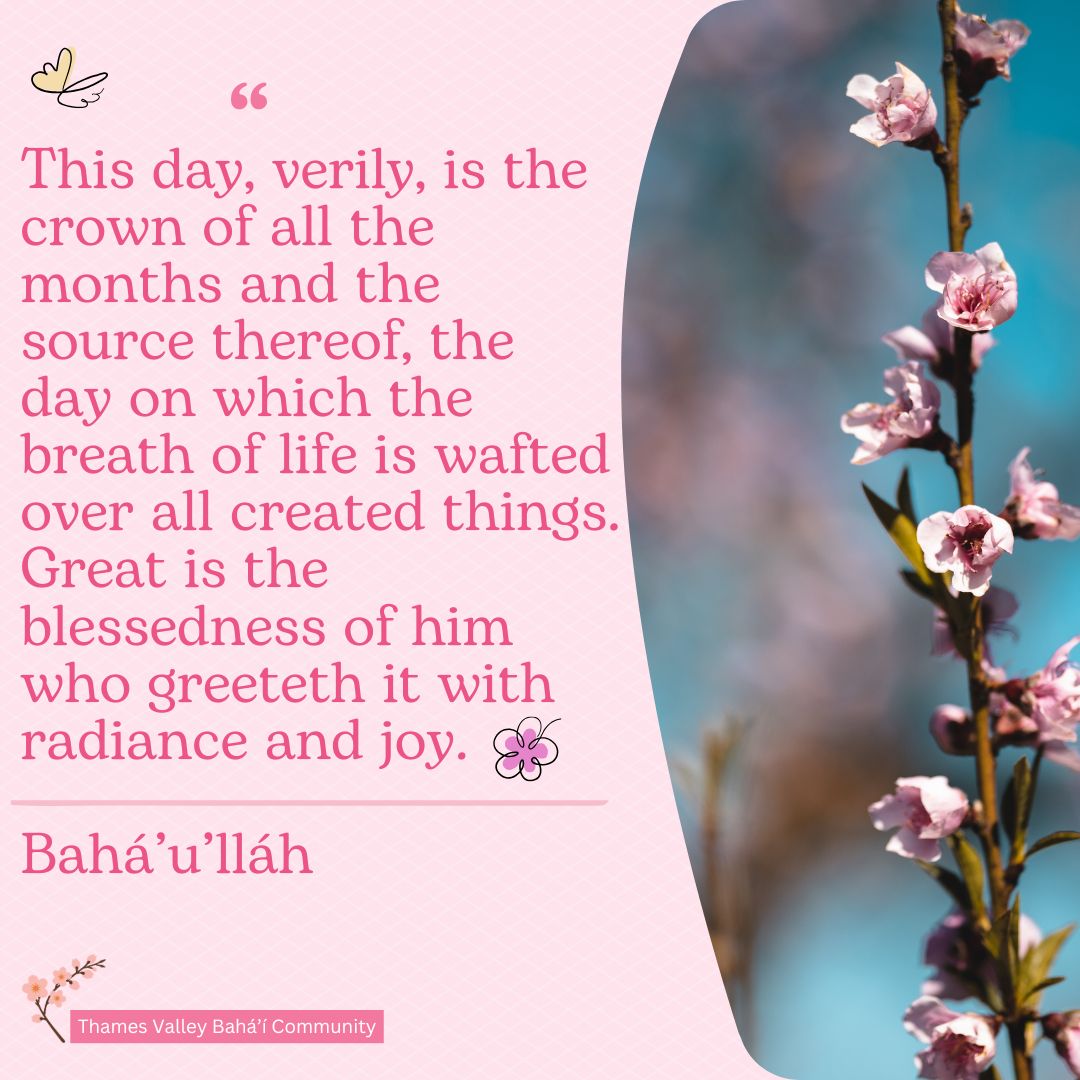
Beloved friends, as Naw-Rúz begins, may your hearts be renewed with light and your souls refreshed with love. May this new year bring unity and peace.
Nawruz, meaning “new day,” is an ancient festival marking the arrival of spring and the renewal of nature. Celebrated for over 3,000 years across parts of Central Asia, the Middle East, and beyond, it symbolizes rebirth, hope, and the triumph of light over darkness. In the context of the Bahá’í Faith, Nawruz holds a distinct and deeply spiritual significance.
For Bahá’ís, Nawruz is both a joyful celebration and a holy day that marks the end of the Nineteen-Day Fast. This fast, observed from March 2 to March 20, is a period of spiritual reflection, prayer, and self-discipline. Nawruz, which falls on the vernal equinox (around March 21), represents not only physical renewal in nature but also spiritual rejuvenation for individuals and communities.
The day is often celebrated with gatherings, prayers, and festive meals, bringing families and communities together. While its cultural expressions may vary across regions, the underlying theme remains consistent: renewal of the soul and a fresh beginning. In Bahá’í teachings, this renewal is tied to the idea of progressive revelation, the belief that humanity continually evolves spiritually over time.
Nawruz in the Bahá’í Faith therefore transcends its historical roots as a seasonal festival. It becomes a moment of unity, reflection, and recommitment to spiritual growth. As hearts are refreshed and spirits renewed, it invites the friends to look forward with confidence and joy. It is our hope that this Nawruz may usher in greater harmony among peoples, inspire acts of compassion and service, and contribute to the advancement, prosperity, and unity of all humankind.
 Thames Valley Bahá’í Community